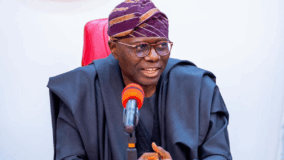
Tony Attah, managing director and chief executive officer of Renaissance Africa Energy Company Limited, revealed the company spent nearly its entire first year simply stabilising operations inherited from Shell, describing the transition as an “emergency” situation that required immediate attention.
Speaking at the PwC BusinessDay outlook event at Nigeria’s commercial capital on Thursday, Attah explained that Renaissance Africa has been operational for only 10 months since taking over the assets in March 2024, making 2026 the company’s first full calendar year of operations.
“The whole of last year was about a decision to simply receive the company and stabilise it before you can set it on a path to growth,” Attah said. “If you imagine that Shell has operated this company for about 65 years, and then a Nigerian company is taking it over, there were many questions.”
The transition represents a watershed moment for Nigeria’s energy sector. For the first time, Nigerian independent companies are acquiring major assets from international oil companies, breaking the traditional pattern where international independents typically purchase divested IOC assets.
Read also: Seven key issues that will shape the economy in 2026 – PWC
“Questions were very basic. Can you people do it? Can you people afford it?” Attah recalled of the negotiation process, crediting PwC for their support throughout. ” It was an unusual period for Shell.”
Attah emphasised that indigenous independent companies now control 50 percent of Nigeria’s oil production, a proportion he expects to grow. “Something big is happening. It’s a massive change going on,” he said, warning that the evolution “may be very transient, and if you blink, you will lose it.”
Renaissance Africa’s mission diverges sharply from Shell’s traditional approach, focusing specifically on Africa’s unique energy challenges.
Attah highlighted that over 600 million Africans, representing 50 percent of the continent’s population, lack guaranteed access to energy, making Western-led energy transition discussions seem disconnected from African realities.
“Most times, I say, what am I transitioning from?” Attah questioned. “From the standpoint of Africa and Nigeria, it’s about integrating our energy systems, working to ensure energy security, because the problem is that energy availability, or lack of energy, is directly proportional to poverty.”
The CEO characterised Renaissance Africa’s approach as “Africa-centric” and fundamentally different from Shell’s vision, emphasising energy security and poverty alleviation over rapid transition to renewables.
The emergence of Nigerian independent companies as major producers marks a significant development in Africa’s energy landscape, potentially reshaping the continent’s approach to resource development and energy policy.

Join BusinessDay whatsapp Channel, to stay up to date
Open In Whatsapp