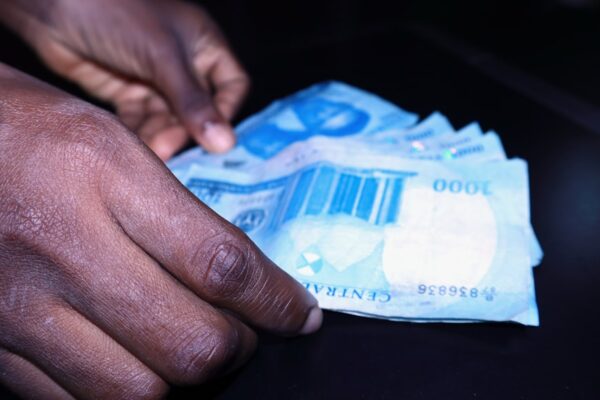
The naira on Tuesday climbed to a two-year high of N1,400 per dollar in the official foreign exchange (FX) market, marking its strongest level since early 2024, as ongoing reforms continue to improve transparency and liquidity across the market.
The rally reflects rising confidence in Nigeria’s macroeconomic direction, supported by stronger foreign exchange inflows and improved market governance.
Data from the Central Bank of Nigeria (CBN) showed that the naira strengthened by 18.6 percent, with the dollar quoted at N1,400.48 on Tuesday, representing a gain of N260.64 from N1,661.12 recorded on December 2, 2024, when the Electronic Foreign Exchange Matching System (EFEMS) commenced. On a day-on-day basis, the local currency appreciated marginally by 74 kobo from N1,401.22 recorded on Monday at the Nigerian Foreign Exchange Market (NFEM).
Muda Yusuf, chief executive officer of the Centre for the Promotion of Private Enterprise, said the appreciation signals a growing level of confidence in the economy and the reform agenda. According to him, the steady inflow of foreign exchange is largely driven by investors’ confidence in the current policy trajectory. “Although we are unable to fully disaggregate the inflows due to data constraints, it is evident that significant inflows are coming through the financial markets, with investments in various financial instruments,” he said.
In the parallel market, popularly known as the black market, the naira gained N65, appreciating from about N1,540 two years ago to N1,475 as of Tuesday.
Read also: Nigeria to tap Africa’s $63bn procurement pipeline – World Bank
Ayokunle Olubunmi, head of Financial Institutions Ratings at Agusto & Co., said the currency’s improved performance has been supported by higher remittances, relatively firm oil prices, reduced disruptions in crude oil production, and moderating imports of petroleum products.
Nigeria’s external reserves have also continued to build, rising by $5.77 billion or 14.3 percent to $46.06 billion as of January 27, 2026, from $40.29 billion recorded on December 2, 2024, according to data on the CBN website.
Yusuf noted that beyond portfolio flows, the economy is benefiting from inflows generated by routine economic activities, particularly exports and non-oil exports, which he said have posted encouraging figures in recent months.
He added that remittances from the diaspora, inflows from the diplomatic community, donor funds, and proceeds from recent Eurobond issuances have also boosted foreign exchange supply. According to him, while oil production remains below optimal levels, the sector has remained fairly steady, with oil prices holding up and production disruptions easing. He also pointed to growing contributions from domestic refining and export-oriented industries, including refined petroleum products, fertiliser and urea, which are increasingly generating foreign exchange.
On sustainability, Yusuf said the naira’s strength could be maintained as long as the current reform momentum is sustained and there are no major external shocks. He noted that the biggest risk remains volatility in the oil sector, particularly a sharp drop in oil prices or output. “As long as the reforms continue and we avoid major shocks, especially from oil, the outlook remains sustainable. The main threat would come from severe external volatility, but so far, output has remained fairly stable,” he said.

Join BusinessDay whatsapp Channel, to stay up to date
Open In Whatsapp