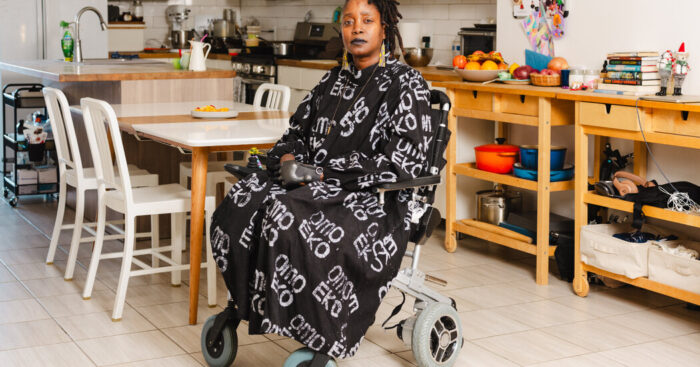
US based cooking expert Yewande Komolafe tells the story of her battle with sickle cell and recounts her journey back to the kitchen, and to herself.
Throughout my two-decade career as a cook — working in restaurants and test kitchens, developing recipes and writing cookbooks — I have been aware of limitations. Carrots, for example, must be prepared a certain way to harness their natural sweetness, coaxing out the sugars by roasting them to a robust depth.
So it is with my body, too. Living with a chronic illness, there have always been limitations to understand, boundaries in which I had to operate. I’m impulsive by nature, eager to act on ideas once I have them, but over time I learned to pace myself, to be more patient, to avoid long hours on my feet. And then, after many years of figuring this out, the boundaries changed again.
I was born with sickle cell disease, an inherited blood disorder. All my life, I’ve had to take exceptional precautions, balancing exertion with adequate periods of rest — I can’t just tough it out.
In December 2023, I went to a hospital in New York City with flulike symptoms and the onset of a sickle cell crisis, for what I thought would be a routine stay. But I did not receive the care I needed, and the results were catastrophic. My memory of this time exists only in text messages I sent to family and close friends: “I’m still in so much pain.”
On the afternoon of Jan. 11, 2024, I woke up from a six-week-long coma, in a different hospital, not knowing how I’d gotten there. This was followed by six more weeks of high fevers and a fog of confusion. A breathing tube had been inserted into my throat. I could only mouth what I felt — a horrendous amount of pain — adding another layer of trauma.
It was a few weeks more before I could turn my neck sideways to take in the hospital room beyond its patterned ceiling. The room was bright, sunlight filtering in through large windows along my bed. Friendly nurses spoke to me in loud, high-pitched voices, and stoic doctors rattled off my circumstances in their detailed, matter-of-fact way.
I was able to recognize my mother, who had flown in from Nigeria, where I was raised, to spend nights with me, and my husband and younger brother, who would visit during the mornings and afternoons. My constant and singular thought during that time was this: If they could see me, then I was safe.
In a meeting with family and medical staff in early March 2024, I learned that both my legs would not survive, and neither would my fingers. Several amputations were scheduled, and, after seven months in the hospital, I would be sent home as a bilateral below-the-knee and digital amputee, navigating the world in an electric wheelchair. I’d later be fitted with prosthetic hands and legs.
In the weeks after my coma, while I was still in the hospital, I was hungry for so many things: the warmth of companionship and friendly conversation, a sense of agency in my care, and as soon as I could sustain it, solid foods. I craved anything with flavor, especially Nigerian food. I spent my days browsing menus on the iPad my husband, Mark, had affixed to my hospital bed, strategizing deliveries to my room. My meals went from lackluster hospital food to carefully curated lunches and dinners with family and friends who visited.
Sundays were my favorite. One of my editors, Nikita Richardson, would stop by with a plethora of baked goods from cafes and pastry shops across the city. We would set up the bounty she’d collected and sample them all, leaving traces of flaky pastry or crumbs of cake flecked across my table. We would catch up on the world outside my four walls.
This time together was more than curative; in those moments, I felt as though I didn’t have to focus on all the ways my life would change after discharge, though I was absolutely certain I would return to the kitchen. I just needed to figure out how.
In the meantime, I could imagine myself perusing pastry shops with my friend, and it was in this dreamy world, somewhere between trance and reality, that I met the brown butter cornmeal cake from Radio Bakery in Brooklyn.
The cake was assertive in its nuttiness, an exquisite balance of sweet and savory, with a crunchy exterior and a dense, pillowy softness within. It became the perfect pastry to complement the first sips of coffee I could manage. Nikita would bring me two — one for Sunday and another for the next day.
It was exactly the kind of recipe I would have jumped to adapt in my roomy kitchen. I longed for the time when I would be back there, with my two young daughters, creating side by side, baking for them. I missed them so much it hurt my heart.

Join BusinessDay whatsapp Channel, to stay up to date
Open In Whatsapp