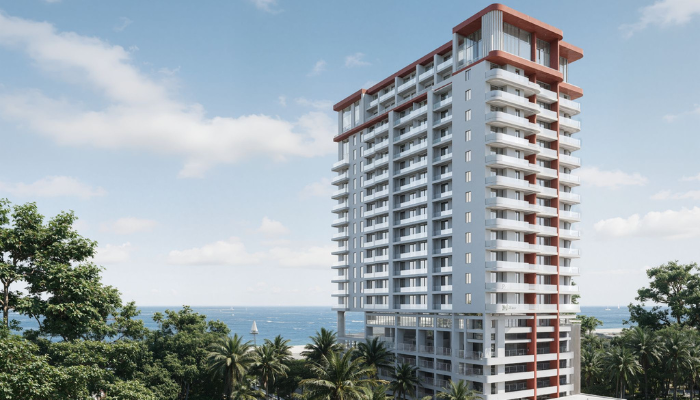
The Lagos–Calabar coastal road is changing how investors view waterfront property in Lagos, particularly along the stretch from Eko Atlantic City to the Bluewater Okunde zone. What began as a transport project is now influencing land use, pricing patterns and investor behaviour across the city’s coastline.

The road links Eko Atlantic City with Victoria Island and Bluewater Okunde, opening new access routes and shortening travel time between commercial and residential districts. Market participants say this connection has altered development plans along the corridor and placed coastal land at the centre of long-term investment strategies.

Data from market transactions point to a sharp shift in land values. A parcel of land measuring about 2,400 square metres in the Bluewater Okunde area, which previously traded at around ₦800 million, is now valued at more than ₦5 billion. Analysts link the increase to direct road access, government zoning decisions, proximity to Eko Atlantic City and the availability of supporting infrastructure.

Developments along the corridor are increasingly being structured around vertical residential schemes. Projects such as The Carnelian on Victoria Island are being positioned as early entry points for investors seeking exposure before the road reaches full completion. Investors say the appeal lies in timing rather than scale, with many targeting off-plan and early construction phases.

According to Keji Giwa, Founder and Chief Executive Officer of Digital Landlords and Giwa Gardens, attention should remain on early-stage projects. He said such phases have historically delivered the “highest return on investment” in comparable urban markets, especially where transport links and zoning frameworks are already defined.

Bluewater Okunde is now viewed by many investors as an extension of Eko Atlantic City’s residential zone. Travel time between the two locations is estimated at four minutes, placing new developments within reach of Victoria Island’s business districts while retaining direct ocean frontage. This proximity is shaping demand from buyers who value access to workplaces, embassies and corporate offices.

Market comparisons are being drawn with other waterfront districts that followed a similar sequence of road access, land reclassification and private development. While price levels in Eko Atlantic City have already adjusted to earlier phases of development, Bluewater Okunde remains priced at a different level. Projections suggest that by 2029, a two-bedroom apartment in Eko Atlantic City could sell for about $1.8 million, while similar units in Bluewater Okunde may trade at around $1.2 million.

The corridor is attracting a defined investor base. This includes high net worth individuals, Nigerians in the diaspora, expatriates in sectors such as oil and gas, finance and technology, diplomats, institutional investors and buyers seeking oceanfront homes. Analysts note that the area is not planned for broad housing supply but for controlled residential and mixed-use schemes.

With Eko Atlantic City, the coastal road and new coastal towns now linked, Lagos is positioning itself within global property flows. Analysts say the pattern is clear: early participation before completion and market maturity has, in other cities, determined who benefits most from long-term value shifts.

Chisom Michael is a data analyst (audience engagement) and writer at BusinessDay, with diverse experience in the media industry. He holds a BSc in Industrial Physics from Imo State University and an MEng in Computer Science and Technology from Liaoning Univerisity of Technology China. He specialises in listicle writing, profiles and leveraging his skills in audience engagement analysis and data-driven insights to create compelling content that resonates with readers.

Join BusinessDay whatsapp Channel, to stay up to date

Open In Whatsapp

