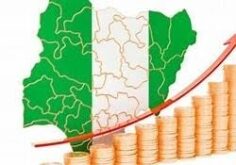
Nigeria’s state governments are living through one of the most resource-rich periods in the country’s fiscal history. Between January and November 2025 alone, they shared in a record ₦33.27 trillion from the Federation Account Allocation Committee (FAAC), far exceeding the ₦25.46 trillion received in the whole of 2024. For the majority of citizens, this windfall has translated into little relief from poverty, failing schools, weak healthcare systems, and persistent insecurity.
This widening gap between revenue inflows and human welfare exposes a fundamental truth: Nigeria’s governance crisis at the subnational level is no longer primarily about money. It is about priorities, incentives, and accountability.
Evidence from BudgIT’s 2025 State of States report paints a troubling picture. Despite unprecedented revenues, states spent an average of just ₦3,483 per person on healthcare in 2024. No state reached ₦10,000 per capita, and only a handful exceeded ₦5,000. Education fared only marginally better, with average per capita spending of ₦6,981 and no state crossing ₦20,000. More concerning is the consistent failure to implement even these modest budgets, with health and education budget performance hovering around 60–67 percent nationwide.
The economic consequences of this neglect are neither abstract nor distant. Underfunded healthcare systems increase out-of-pocket spending, pushing households deeper into poverty and reducing labour productivity through preventable illness. Weak education investment constrains human capital formation, leaving states trapped in low-skill, low-productivity economies dependent on federal transfers. In effect, states are consuming today’s revenues while undermining tomorrow’s growth.
Meanwhile, many governors continue to favour politically visible capital projects, flyovers, boulevards, and prestige buildings over the slower, less tangible work of investing in people. Roads can be commissioned within months; improved literacy rates or reduced maternal mortality take years. In a political system shaped by four-year electoral cycles, the incentive structure rewards immediacy over impact.
This is not to deny that some states perform better than others. A few have shown relatively strong budget implementation in health and education, while others operate under genuine structural pressures such as heavy wage bills, inherited debt, or security challenges. But these factors do not explain the scale or consistency of underinvestment across the federation. The problem is systemic, not incidental.
At its core lies a failure of accountability. State Houses of Assembly, constitutionally empowered to scrutinise budgets and expenditures, are often politically subordinated to the executive. Oversight is weak, budget debates are perfunctory, and expenditure tracking is minimal. Civil society and the media, particularly at the state level, lack the resources, access, or protection to sustain investigative pressure. Citizens, meanwhile, are conditioned to equate governance with visible construction rather than measurable improvements in welfare.
This governance culture has real costs. States that neglect health and education are not saving money; they are deferring costs into the future: higher unemployment, rising crime, worsening health outcomes, and deeper poverty. A state that spends less than ₦4,000 per person on healthcare is effectively transferring the burden to households, informal carers, and already stretched families.
What is required now is not rhetorical commitment but institutional reform. First, states should adopt enforceable minimum spending benchmarks for health and education, aligned with population size and development needs, not arbitrary budget lines. Second, FAAC inflows should be more transparently linked to performance outcomes, with greater use of conditional or incentive-based transfers that reward implementation, not announcements. Third, state legislatures must be strengthened, financially and politically, to function as genuine oversight bodies rather than ceremonial extensions of the executive.
Equally important is public reorientation. Citizens must demand outcomes, not optics. A functioning primary healthcare centre is more valuable than another flyover; a well-trained teacher has a greater long-term impact than a ribbon-cutting ceremony. Development is not always immediately visible, but its absence is painfully felt.
Nigeria’s states are not poor. They are misallocating abundance. History will judge this moment harshly if record revenues leave behind little more than concrete monuments amid human deprivation. The choice before governors is stark: invest in people and build productive, resilient economies or continue the cycle of spending that looks impressive today but impoverishes tomorrow.
The money is already here. What remains in question is the will to spend it wisely.

Join BusinessDay whatsapp Channel, to stay up to date
Open In Whatsapp