The ongoing controversy stirred by the Single Treasury Account (TSA) policy recently introduced by the Federal Government may take a long time to abate. This apprehension stems from the fact that the policy concerns and touches the heart of the economy as represented by the banking sector. There is no doubt that the banking sector of the Nigerian economy is hard hit by this policy, which many economic analysts believe is obnoxious, draconian and counterproductive.
Since its inauguration on May 29, 2015, the President Muhammadu Buhari administration seems to have a penchant for churning out obnoxious and draconian policies that are symptomatic of the military era which rules by decree and regimental fiat rather than the rule of law enshrined in a democratic setting. The TSA policy, which was introduced by a circular issued by the Head of the Civil Service of the Federation, Danladi Kifasi, on August 7, 2015, directed that all receipts due to the Federal Government or any of its agencies are to be paid into the federal sub-treasury account maintained in the Central Bank of Nigeria (CBN).
The implementation of the TSA, according to the circular, is expected to aid transparency and facilitate compliance with Sections 80 and 162 of the Constitution of the Federal Republic of Nigeria 1999 (as amended).
TSA is a unified structure of bank accounts enabling consolidation and optimal utilization of government’s cash resources. It is a bank account or a set of linked bank accounts through which government transacts all its receipts and payments and gets consolidated view of its cash position at any given time.
The president’s directive is expected to end the previous public accounting situation of several fragmented accounts for government revenues, incomes and receipts, which in the recent past has meant the loss or leakages of legitimate income meant for the federation account. According to experts, TSA consists to concentrate all government funds on one account for its proper management. In other words, it is an instrument put in place to control government finance resources and expenditures. It ensures complete, real time information on government cash resources and improves operational and appropriations control.
The measure, according to the government, is to ensure transparency and accountability in the operations of public accounts.
Also affected by the directive are foreign missions, teaching hospitals, medical centres and federal tertiary institutions. Agencies, like the CBN, Security and Exchange Commission, Corporate Affairs Commission, Nigerian Ports Authority, Nigerian Communications Commission and the Federal Airport Authority of Nigeria are also captured in the directive. Others include the Nigerian Civil Aviation Authority, Nigerian Maritime Administration and Safety Agency, Nigerian Deposit Insurance Corporation, Nigerian National Petroleum Corporation, Federal Inland Revenue Service, Nigerian Customs Service, and the Department of Petroleum Resources.
The president’s directive was in consonance with Section 80 of the 1999 Constitution. Section 80 (1) of the constitution reads, “All revenues or other moneys raised or received by the Federation (not being revenues or other moneys payable under this Constitution or any Act of the National Assembly into any other public fund of the Federation established for a specific purpose) shall be paid into and form one Consolidated Revenue Fund of the Federation.”
But rather than listen to the cry of the people for the government to review the policy considering its negative consequences on the nation’s economy, especially the banking sector, President Buhari applied the big stick by setting a deadline of September 15, 2015 for all ministries, departments and agencies (MDAs) of the Federal Government to comply with the instructions on the TSA or face sanctions.
According to the presidency, “By that deadline, all Federal Government revenues must go into the Central Bank Treasury Single Account (TSA), except otherwise expressly approved.” Kifasi urged the MDAs to ensure strict compliance with the deadline to avoid sanctions.
“In this regard, His Excellency, Mr. President has directed that all MDAs are to comply with the instructions on the Treasury Single Account (TSA) unfailingly by Tuesday, September 15, 2015. Heads of MDAs and other arms of government are enjoined to give this circular the widest circulation and ensure strict compliance to avoid sanctions,” Kifasi wrote.
The TSA policy is already taking its toll on the nation’s economy. The banking system is trembling and faces an inevitable collapse. There are fears that one of the new generation banks may already be teetering on the brink of distress. Fifty-five percent of the bank’s deposit is from the public sector. Last year the bank recorded N22 billion as gross profit. Seventy percent of the profit was realised from treasury bills and other debt instrument of the Federal Government.
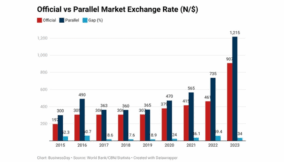
The pain of TSA in the banking system is excruciating. TSA would rock the banking system because government is striking at a time when Nigeria’s oil revenue has dwindled precipitously. The immediate impact of TSA on the economy has been largely negative. Inter-bank lending rates shot up by 70 percent the week the policy was announced. The mopping up of huge liquidity in the banking system could not even strengthen the naira. The exchange rate of the naira in the parallel market jumped from N213 to N223 to the dollar. Some of the Bureau de Change (BDC) operators could not mobilise the naira component to pick up their dollar allocations. The scarcity of naira triggered a rather strange scarcity of dollars, just the way excess naira in the system would do. Nigeria’s economy is something of an enigma.
As expected, TSA has escalated lending rates. There are fears that prime lending might be cruising perilously above 21 percent. Endangered species like small and medium enterprises (SMEs) now risk being priced out of the money market. The cost of funds for the perceived high risk ventures might surge above 35 percent.
TSA would almost certainly worsen the bear runs in the capital market. Banks are poised to respond to the liquidity squeeze with a hike in deposit rates that would make returns on investment in equity even more repulsive. Investors in the Nigerian Stock Exchange (NSE) would be tempted to sell their shares and invest in the money market, thus worsening the bear runs in the capital market.
With this backlash on the economy, it is difficult for Nigerians to accept government’s explanation that the introduction of the TSA is not a punitive measure targeted at any government establishment. Is this the change Nigerians voted for? Certainly not.
Asma’u Hassan

Join BusinessDay whatsapp Channel, to stay up to date
Open In Whatsapp