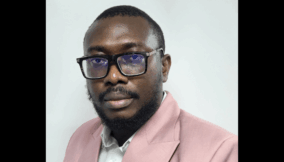
Michael O. Lawanson, a Nigerian data scientist at the University of Arkansas, United States, is at the forefront of global efforts to transform cancer survival modeling and advance digital health reforms, with a strong focus on equity and inclusion. Through cutting-edge research that bridges clinical medicine and digital innovation, Lawanson is reshaping how cancer outcomes particularly Multiple Myeloma, a form of blood cancer are understood and addressed. He argues that cancer care must be embedded in national development strategies, stressing that health is not only a medical concern but also a socioeconomic and systemic issue. In this interview with SIKIRAT SHEHU, Lawanson discusses his research on Multiple Myeloma, healthcare inequalities, equity-driven survivorship models, and the urgent need for digital health reforms in Africa and beyond. Excerpts:
Can you tell us about your recent research on Multiple Myeloma?
My most recent studies focus on understanding survival outcomes in Multiple Myeloma (MM), a type of blood cancer. One major finding is that age at diagnosis significantly affects survival. Using advanced statistical techniques such as stratified Cox regression and spline-based hazard modeling, we discovered that patients over the age of 70 face a 3.3-fold higher risk of death compared to younger patients. These insights can guide clinicians toward more personalized and age-appropriate treatment strategies.
Could you shed more light on blood cancer, particularly Multiple Myeloma, and its impact on patients?
Multiple Myeloma is a cancer of plasma cells, white blood cells responsible for producing antibodies. In myeloma, these cells become malignant, multiply in the bone marrow, and crowd out healthy blood-forming cells. This leads to anemia, bone pain, kidney failure, and weakened immunity.
While MM is currently considered incurable, modern therapies can significantly slow disease progression and extend life expectancy. In developed countries like the United States, the five-year relative survival
rate is approximately 60–62 per cent. However, the disease places a heavy physical, emotional, and social burden on patients, who often undergo long-term treatments such as chemotherapy, stem-cell transplants, targeted therapy, and immunotherapy.
My research also highlights that older adults face higher mortality risks, underscoring the need for tailored care strategies.
What sets your Multiple Myeloma research apart?
We applied innovative survival models, including Reverse Kaplan-Meier methods and spline-enhanced Cox regression, which help correct bias and capture non-linear effects of age on survival. These approaches are not only statistically robust but also clinically meaningful. We are also integrating explainable artificial intelligence (AI) to improve transparency and clinical trust in predictive models.
How does your work address healthcare inequality?
Equity is central to my research. In one systematic review, we examined how race, income, and education influence access to cancer care in the United States, revealing persistent disparities. Similarly, my work in Africa explores how scalable digital health tools can bridge rural-urban gaps in healthcare delivery. I strongly believe that data science should drive inclusive transformation, not deepen existing inequalities.
You have advocated for an equity-driven survivorship model and digital health reforms. Could you elaborate?
An equity-driven survivorship model ensures that cancer research and clinical tools reduce disparities by accounting for unequal access to diagnostics, treatment, and support systems. Instead of relying on average outcomes, my models capture the non-linear effects of age and social determinants, making predictions relevant across diverse populations.
On digital health reform, particularly in Sub-Saharan Africa, the focus is on strengthening health informatics infrastructure, workforce training, governance, and data standards. These reforms enable quality data-driven decision-making, even in resource-limited settings, supporting telemedicine, chronic disease management, and evidence-based policymaking.
Does your research address patients who are not digitally or computer literate?
Absolutely. Technology should support people, not burden them. While my research uses advanced analytics, the goal is to improve real-world care. This includes designing clinician-friendly dashboards, tools that function offline, and decision-support systems integrated into routine workflows.
For patients with limited digital literacy, health systems can adapt by simplifying interfaces, using local languages and symbols, training community health workers as intermediaries, and pairing technology with human support. Equity means ensuring that innovation does not exclude those most in need.
What impact do you hope your research will have?
My goal is to bridge the gap between clinical needs and computational innovation. Whether through equitable cancer models, improved telemedicine systems, or stronger digital health governance, I aim to empower policymakers, clinicians, and patients especially in underserved communities.
Nigeria faces major challenges in cancer care. What is your message to Nigerians and policymakers?
Nigeria’s cancer care system faces serious structural issues, including limited diagnostic infrastructure, inadequate oncology centers, high out-of-pocket costs, and low insurance coverage. These challenges delay diagnosis and worsen survival outcomes.
My message is threefold: Awareness and Early Detection: Strengthen public education and screening efforts.
Health System Strengthening: Invest in diagnostics, trained specialists, and decentralized care.
Policy and Financing: Expand universal health coverage to include cancer care, subsidize treatment, standardize care pathways, and establish national cancer registries.
What preventive measures should be prioritized?
Prevention and early diagnosis remain our strongest tools. These include regular medical check-ups for high-risk groups, public awareness of symptoms such as bone pain and fatigue, strengthened screening policies, and improved training for healthcare workers to recognize early warning signs.
Well-informed communities make healthier decisions, and today’s progress in cancer survival reflects the power of science combined with equitable access to care
You mentioned health informatics in Sub-Saharan Africa. What are your key recommendations?
In our Medical Research Archives publication, we proposed a roadmap that includes investing in data infrastructure, standardizing health records, training informatics professionals, and establishing regional health data hubs. These steps can help African countries leapfrog traditional barriers and embrace precision health at scale.
What are your next steps?
I am currently completing a PhD at the University of Arkansas at Little Rock, focusing on a bias-resista the survival model for Multiple Myeloma using reverse Kaplan-Meier weighting and explainable machine learning. Beyond academia, I aim to foster cross-border collaborations between Africa and the United States to advance data science for global health equity.

Join BusinessDay whatsapp Channel, to stay up to date
Open In Whatsapp