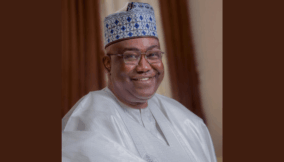
Willie Obiano, former governor of Anambra State, joined a growing list of prominent Nigerians “killed” by social media on Friday, after a false report of his death spread widely, reviving concerns about why citizens are so eager to circulate, and sometimes celebrate, the imagined demise of the powerful.
While the news was trending, his former Commissioner for Information and Public Enlightenment, Don Adinuba flatly pooh-poohed the report.
Adinuba issued a statement, describing the reports of Obiano’s death as “false and misleading” and urging the public to disregard them. “I spoke with Chief Obiano just this morning. He is hale and hearty. There is no truth to the rumour about his death,” he said, warning against what he termed “irresponsible journalism.”
The former commissioner stressed that such unverified information could cause unnecessary panic and distress, not only to Obiano’s family and supporters but also within the wider political community.
“This is not just about Chief Obiano. It’s about journalistic ethics and the damage fake news continues to do in our society,” Adinuba added.
The rumours had claimed that Obiano had passed on in a London hospital following complications from urinary cancer and severe heart failure, circulated shortly after reports from Sahara Reporters suggested his health had deteriorated rapidly. According to sources cited in these reports, the former governor had been under intensive medical care in London, with his condition worsening over recent months.
Not just Obiano
These premature obituaries are no longer rare. Over the years, Nigerians have “killed” public figures ranging from former head of state Yakubu Gowon to Nollywood legend Chiwetalu Agu. Some victims read their own “death” online before family members did.
Azikiwe, Obasanjo, Mahmood Yakubu, among others…
Recall that former President Olusegun Obasanjo, and the immediate past chairman of the Independent National Electoral Commission (INEC), Prof. Mahmood Yakubu, were also at different times rumoured to have died.
The most (in)famous of these false deaths happened in 1989 when news broke that the first President of Nigeria, Nnamdi Azikiwe, the Owelle of Onitsha, had passed away. He was then 85.
Nigerians and members of the global community were shocked and saddened, such that many – even his kindred Igbo, friends and political associates – took the news on its face value, and began sending condolences to the Azikiwe family, and the Government and people of Nigeria, and making arrangements for a state burial for him.
But the truth was that the “Great Zik of Africa” was “alive, hale and hearty,” and was at the time, unprepared to join his ancestors!
He wished the purveyors of the death news to stew in their own juice. As if his prayers worked, some of those who had made haste to arrange for his funeral died before he finally departed at 91 on May 11, 1996.
Read also: I am alive, hale, hearty, and in excellent health – Obiano
On December 31, 2010, Obasanjo quoted one of his friends as saying that he’d “counted seven times” that Obasanjo’s rumoured to have died between 1999 and 2010. Obasanjo stated this at his Hill Top home in Abeokuta, capital city of Ogun State, when he addressed the news about his “demise.”
Obasanjo said: “I think people take delight in speculation and rumouring. A friend of mine told me this morning (December 31, 2010), breaking to me the news of my death, and he was trying to confirm. He said he had counted seven times that I have been rumoured dead since the eve of my inauguration in 1999 as a democratically-elected President of Nigeria till today.”
According to him: “Those who indulge in this – and those who have superstitious belief that when there are rumours and speculations like this, it means longevity – will not give up. Whether longevity or not, what I know is that until the Good Lord, who has created me, decides to say yes, ‘I have reached my take-off point to return to Him,’ people may speculate, people may rumour and that will be their own handicap.
“My word to Nigerians is that wishes are not horses. People wish and God does not make it to happen. But I know that anybody created is bound to die sometimes. When my time comes, it will not be man that will decide; it is in the hands of God,” he said.
As for Prof. Yakubu, the second rumour about his death came in December 2024, three years after a similar “fake news,” prompting the INEC chairman to declare that, “I am alive, hale and hearty,” and presented the itinerary of his activities in Nigeria during the timeframe of his reported hospitalisation in London.
A statement by Yakubu’s Chief Press Secretary, Rotimi Oyekanmi, reads in part: “Our attention has been drawn to a fake news narrative circulated by a section of the social media, claiming the purported death of the INEC chairman, Prof. Mahmood Yakubu, at a London hospital. The story first appeared on Monday, 9th December, 2024.
“We hereby appeal to the public to disregard the rumour. Prof. Yakubu is alive, hale and hearty. In fact, he has not travelled to London in the last two years. He was present at an interactive meeting with the House of Representatives Committee on Electoral Matters on Wednesday, 11th December, 2024.
“He also chaired the commission’s meeting with Resident Electoral Commissioners on Thursday, 12th December, 2024. Both events were widely covered on television and reported on the front pages of most newspapers yesterday, Friday, 13th December, 2024.”
A litany of high-profile death hoaxes
Apart from the cases listed above, some other prominent Nigerians had been subjects of persistent, yet false, death rumours, which are often spread on social media. These include:
Taoreed Lagbaja: The Nigerian Army officially dismissed rumours in October 2024 that the Chief of Army Staff had died in an undisclosed hospital overseas.
Olu Jacobs: The veteran Nollywood actor has been a repeated victim of death hoaxes, which his wife and colleagues have consistently debunked by providing evidence he is alive.
Ibrahim Babangida: The former military ruler has repeatedly denied rumours of his death over the years, with aides condemning the reports as malicious.
Muhammadu Buhari: During his presidency, particularly when he was abroad for health reasons, rumours and conspiracy theories (such as the “Jibril of Sudan” body double theory) about his death were rampant. He eventually passed away in July 2025.
Why are Nigerians so quick to kill the living?
First is the politicisation of rumour. In a hyper-polarised country, fake death announcements are weaponised to humiliate rivals, settle political scores, or taunt adversaries. A politician facing trial or controversy can suddenly “die” on social media, not from illness, but from public hostility. Obiano’s case fits this pattern: a former governor entangled in EFCC investigations becomes an easy target for malicious speculation.
Second is the craving for sensationalism. With digital platforms rewarding speed over accuracy, unverified news spreads faster than corrections. Death, real or imagined, commands attention, clicks, and virality. In a country where distrust in institutions is high, many believe anything before verifying it.
Third is the collective frustration of a society under pressure. Nigerians battling economic decline, insecurity, and daily hardship often project their anger onto public figures. The death of the powerful is sometimes treated as a symbolic victory against a system perceived to have failed them. Morbid fantasies blur into rumours, and rumours into “breaking news”.
Finally, there is a cultural fascination with the dramatic. Nigerians love gist, conspiracy, and the supernatural. Death rumours sit at the intersection of all three.

Join BusinessDay whatsapp Channel, to stay up to date
Open In Whatsapp