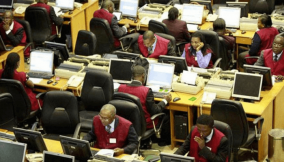
Domestic investors dominated activities at the Nigerian stock exchange as domestic transaction increased by N68 billion in the month of June, according to the latest Nigeria Stock Exchange (NSE) report on equities transaction for June 2015.
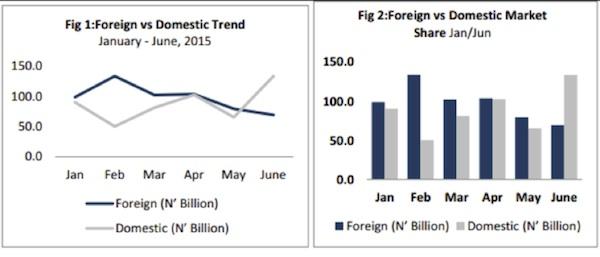
A total of N133.8 billion was recorded as domestic transaction for the month of June, up 103.7 per cent from previous month and an increase of 24.5 per cent year on year.
Total transactions at the nation’s bourse increased to N203.45 billion (about $1.04 billion) in June 2015, up 39.9 per cent from May 2015. Foreign Portfolio Investment (FPI) transactions decreased to N69.65 billion, down 12.69 percent from May 2015
According to the report, foreign investors conceded about 31.5 per cent of trading to domestic investors as FPI transactions decreased from 54.8 per cent of the total transactions in May to 34.2 per cent in June while domestic transactions increased from 45.2 per cent to 65.8 per cent over the same period.
Tumbling oil prices have eroded Nigeria’s lure for foreign investors, who are likely to venture back if the authorities can give clarity on policy direction and devalue the naira.
After the peaceful elections and transition, investors were keenly awaiting government decisions on the oil and gas sector, power interventions, investment incentives and monetary policy including the exchange rate, but all this have stayed longer than expected, analysts said.
“For foreign investors the key is that there is a working foreign exchange market and they are able to see how demand and supply interacts,” Razia Khan, Regional Head of Research for Africa, Standard Chartered Bank, in an interview with BusinessDay at the side line of the World Economic Forum (WEF).
“A lot of foreign investors are waiting on the sidelines, and you won’t see the big foreign portfolio coming in until we see that adjustment in currency,” she adds.
CBN recently, officially stopped the sale of dollars for 41 items as it sought to reduce pressure on the naira and preserve the nation’s external reserves.
The naira has been hitting record lows on the parallel market since the central bank measures introduced some weeks ago.
The central bank (CBN) said in a statement early July that it believed the 22 percent depreciation in the naira after it scrapped the official foreign exchange window “is optimal at this time” and the bank would not be pressured into “desperate measures”.
Africa’s largest economy is grappling with a commodity price downturn, the prospects of higher US interest rates, slower Chinese growth and power shortages crimping growth.
Investors in the capital market have in the last 6 weeks lost over N400 billion in value terms due to what analysts described as a combination of delay in economic direction and uncertainty in the forex market.
Josephine Okojie

Join BusinessDay whatsapp Channel, to stay up to date
Open In Whatsapp