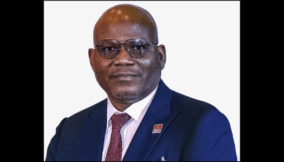
Igbinosun Idowu Peter, an expert in Agricultural Extension and Management, is the national President of the National Rubber Producers, Processors and Marketing Association of Nigeria (NARPPMAN). In this interview with IDRIS UMAR MOMOH, in Benin City, the agriculturist and a retiree from Michelin Tyre Manufacturing Company reeled out the challenges confronting the subsector and why Nigeria needs a National Rubber Policy and strategy. Excerpts:
As the National President of the National Rubber Producers, Processors and Marketing Association of Nigeria, how is the rubber subsector faring?
In the 70s and early 80s, Nigeria was the number one rubber producer in Africa and the 5th in the World. Today, we are number two in Africa and 13th in the World. Even though we are number two in Africa, we are only producing 6% percent of Africa’s total production as compared to those that occupied the first position, the Côte d’Ivoire, which is producing 78% of Africa’s total production.
Our export revenue in 2021 was $20.8 20.8million as compared to Côte d’Ivoire, which is number one in Africa and number three in the World. Their export revenue was $3.1billion.
What are the challenges so far encountered?
The government’s attitude towards rubber development in Nigeria has not been encouraging at all. For the past three-and-a-half years, we have been writing the National Rubber Policy and Strategy. This was championed by the Federal Ministry of Industry, Trade, and Investment in collaboration with other government agencies and the key stakeholders in the industry. As we speak, the policy has still not been developed.
The former Minister of Industry, Trade and Investment, Otunba Adeniyi, three years ago inaugurated a technical committee to revive the moribund rubber and tyre industries in Nigeria. To date, the report from that committee has not been seen or heard, even though NARPPMAN spent its money to complete the assignment and submitted it.
It will interest you to note that the Federal Government, through the African Continental Free Trade Area (AfCFTA), frustrated the World Rubber conference that was scheduled to hold in Nigeria in 2024 by cancelling the hosting the same day the conference was to start. The excuse they gave was that they could not guarantee the security of foreigners who would be coming to attend the conference. This programme was supposed to take rubber development in the country to the next level. When they cancelled this programme other national programmes were still ongoing in Abuja.
To access ministers and some agency heads is like a camel passing through the eye of a needle. We wrote over six letters to the former Minister of Agriculture and Food Security requesting to meet with him. There was no feedback from them.
There was also a communique from our national conference in 2021 that did not receive the blessings of the government even after a series of follow up.
In Edo state, for example, the government led by Governor Godwin Obaseki set up a committee to develop a rubber policy and strategy three years ago after much discussion. The committee came up with a draft policy and strategy for rubber development in the state. And, as I speak, that drafted policy ended up on his table. Nothing was done about it.
There was no political will to drive any of the policies. Several letters were sent to him, but nothing came out of it; meetings were held with his commissioner for food and security, and he was helpless.
In Cross River State, the state government sold a rubber processing industry to an oil palm company to destroy the already established rubber plantation for the establishment of an oil palm company.
Whereas, we have a company in Calabar, a pharmaceutical and healthcare industry that is producing condoms but imports latex from Malaysia.
What are the demands of the association to move the industry forward?
We want the federal government of Nigeria to come up with a policy through the Central Bank of Nigeria (CBN) to fund long gestation crops. The gestation period of rubber is a serious disincentive for investors and banks who are willing to fund the rubber plantation development. Not all banks are willing to put their money into an investment and wait for seven years before starting to get repayment.
We have been surviving in the industry without loans, especially in Rubber Development plantations precisely. That was why we are where we are now, because whatever we are getting from our plantations, we are using it for expansion.
So, we want a policy from the government through the CBN to fund long gestation crops.
We want the state governments to collaborate with NARPPMAN by having their state’s Rubber Development policy and strategy and make efforts to provide us with lands and subsidies.
If the state government is not interested in the rubber development policy and strategy, pursuing that goal in the state would be difficult to achieve.
Today, we have 17 states out of 36 states, including the Federal Capital Territory (FCT), that we have inaugurated. But rubber can only be planted in 24 states out of the 36 states.
So, we want the state governments to key into this rubber development drive in Nigeria.
We also want the federal government to revamp the Rubber Board just like we have the Cocoa Board. The reason is that we want moderation, we want government interventions. We have never had bilateral or multinational interventions except in the time of President Olusegun Obasanjo. The intervention was supposed to be a 10-year programme, but it became a two-year programme. Unfortunately, immediately after President Obasanjo left office, the programme was abandoned.
In Nigeria, there is no continuity of policy. Every politician who comes into power either disregards or destroys what their predecessors have done and starts afresh with their own policy.
Some of them don’t even have the political will to continue from where their predecessors left office. For example, in the Western world, we have policymakers. Regardless of who becomes the president, the policy must continue. There is no wastage. But in Nigeria, it is not like that.
We also want the National Rubber Policy and strategy. It will give the investors the direction to go, and help investors with information.
As I speak, we don’t have a database. Not only for rubber but for a lot of agricultural activities in Nigeria. We need a database because it will help put strategies in place for investors to look at where we are and how they can invest.
It is interesting to let the public know one of the most disturbing aspects of the development of the rubber value chain. Before now, we had three tyre manufacturing companies in Nigeria. We had Michelin, where I worked and retired, which later became Rubber Estate Nigeria Limited (RENL). We had Dunlop and another one in Ijebu-Ode, Ogun State. These companies are no longer in Nigeria. They have relocated.
There are several reasons why they left Nigeria. But the most important among them is what I want to describe as policy somersaults. The federal government gave import licenses to people to import tyres, regardless of the people who were already manufacturing tyres in the country. The people who were importing these tyres were now selling at lower prices compared to those who were producing within the country.
So, the concentration was now shifted to the importers instead of the manufacturers. That was one of the reasons why the companies had to fold up because they could not produce at a loss.
We also have the issue of multiple taxation. The federal government will tax, states will tax, local governments will tax the same product, and even the communities too. It was good as if the companies were working for governments and communities. They don’t make a lot of profit.
The spate of insecurity is also a very serious matter.
As of today, we have about five tyre manufacturing companies in Nigeria. One in Lagos State is producing motorcycle, tricycle tyres, and tubes. Another one in Edo State. The company is producing all kinds of tyres, including heavy-duty tyres. We also have another one in Ogun State. They are already in production. We also have another one that is 90 percent completed and is located in Sagamu, also in Ogun State.
Now, the pain is that these companies do not have enough raw materials for their industries to drive production.
For the AfCFTA. Nigeria is now a market for African countries to sell their products and we are now encouraging the players of this value chain in Nigeria to compete favourably. I just told you that a company in Calabar is importing Latex from Malaysia, Plastic companies in Kano and in Port Harcourt are importing raw materials from Côte d’Ivoire. The reason for this is the paucity of raw materials.
Before now, we had about 56 Rubber factories in Nigeria. As at today only about 13 or 14 are in existence, the rest of them have closed shop and gone under.
Out of these 13 or 14 factories in Nigeria today, only two are producing above 60 percent installed capacity. Some are producing less than 20 percent capacity. The reason for this is also the issue of paucity of raw materials
What is responsible for this paucity of raw materials?
The majority of the trees that were planted in the early 70s and 80s, which are between 40 and 50 years old, are producing below economic viability. Some of those trees should have been fell and replanted by now with an improved variety of rubber. Unfortunately, a lot of the farmers have abandoned their farms, some have fell their trees and used them for furniture, firewood, and for whatever reasons that are known to them.
Nigeria had about 200,000 hectares of Rubber plantations in the country, but as of today, we cannot boast of 165,000 hectares, whereas Rubber can be planted in 18 million hectares in the country.
What destroyed Rubber and, of course, agriculture generally in Nigeria was the crude oil. When crude oil was discovered in the country, all our attention left agriculture, which was the mainstay of the economy, and was directed to crude oil and refined petroleum. That is how Nigeria became a mono-economy.
We are a consuming economy and producing nothing. And the companies that are here to produce are not being encouraged, value chain players are not encouraged.
So, I want to use this medium to appeal to governments to come to the aid of this subsector, to develop the Rubber value chain in Nigeria, to encourage the players in the value chain, to encourage industrial players in the value chain, to encourage those that have brought in their money to invest in our business space by establishing different types of Rubber by-products in Nigeria. To get enough raw materials to drive their industries.
How much do you think this subsector, if adequately funded and developed, can add to the GDP of the country or a state annually?
Besides generating a lot of employment, when we built a 10-year-old roadmap just to plant 100,000 hectares of Rubber in Nigeria, it was going to cost about N85 billion. But this products’ return on investment for 25 years is N3.2 trillion.
I can tell you without mincing words that it costs about N8.6 million as a result of the high exchange rate to cultivate one hectare. Like I said earlier, we are a consuming economy and producing nothing. So, a lot of things that are being imported into the country are imported in dollars, and you know how much the naira is to the dollar now.
Before the exchange rate shot up, when the naira was about N450 to a dollar, the cost of one hectare of rubber plantation from start to finish, from clearing and planting for seven years, was about N2.1 million, but today it is about N8.6 million. I can tell you the return on investment on that one hectare. All that you spend from the land preparation, planting, and to the point of production, in five years you will recoup all your expenditures. But you are going to get a return on investment from between 25 and 30 years of production, depending on the production mechanism you have put in place.
Côte d’Ivoire has one million hectares of rubber plantation today, and they are making $3.6 billion annually on export, not local consumption, but for export alone, then you can imagine how much Nigeria would be making if we develop our rubber value chain in the country.
The Côte d’Ivoire is making more money now because, as of today, the cost of one kilogram of rubber at the factory gate is N1300. This has been the highest price in my past 31 years in the rubber industry. The highest I have ever seen is N480, which is about 11 and 12 years ago. It therefore means that if you have 1 ton of rubber now, you have N1.3 million. And in one month, people who have a big plantation of 20 and 30 hectares are making a minimum of between N12, N13, and N15 million every month.
How much is Nigeria losing annually?
We are losing several billion Naira. We are also losing billions of dollars to newcomers, Malaysia, Thailand, Indonesia, and China. These four countries put together are generating about $1.6 trillion annually. So, you can imagine what Nigeria is losing.
How has the renewed hope agenda of President Bola Ahmed Tinubu affected the subsector?
That is the reason why we are crying out now. The Rubber Research Institute is situated in Edo State. NARPPMAN is collaborating with RRIN to develop rubber in this country. But as I speak, RRIN is seriously underfunded.
They cannot even produce enough planting materials for a local government; the highest they can do is about 100,000 planting materials.
Today, one of the challenges we are having is how to get planting materials and land because the rubber is land-intensive, capital-intensive, and labour-intensive.
So, as of today, we have not seen the renewed hope in our subsector. And we are appealing to the President because whatever we are going to say now and how we are going to say it can draw the attention of governments in our direction. We are ready to say it because I know too well that rubber is planted in the northern part of the country. We have a rubber plantation in Kaduna and in Taraba.
So, we want to see the renewed hope agenda in our value chain development. That is why we are calling on the governments to revamp the rubber board, give us a national rubber policy, encourage the players in the industry by giving us subsidies, planting materials, because that is how Ghana and Côte d’Ivoire started, and today they are ahead of us.
What we are producing is grossly inadequate to drive the industry. I have worked in Ghana, Côte d’Ivoire, Brazil, and part of France. I see what rubber has done for people in the World, but when it comes to Nigeria, the case is reversed.
I am passionate about driving this sub-sector to the next level. But we can’t do it alone without the government’s support. We don’t want governments to give us money but let them encourage us by giving us an enabling environment to do our business.

Join BusinessDay whatsapp Channel, to stay up to date
Open In Whatsapp