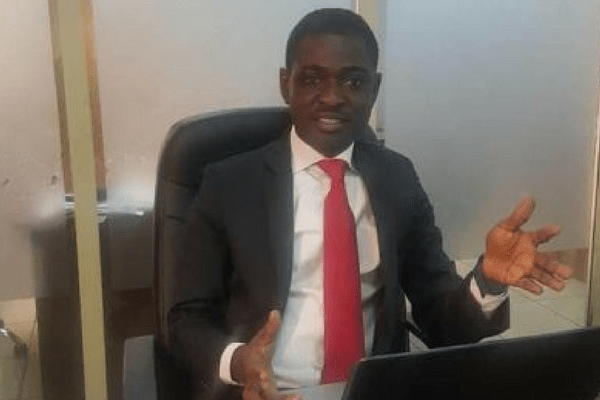
The crippling impact of the economic recession in Nigeria is weighing on virtually every sector of the economy including the mortgage sub-sector where liquidity issues arising from poor capital base and lack of long term funds have combined with non-performing loans to pile pressure on operators. In this interview, AYODELE OLOWOOKERE, the CEO, Omoluabi Mortgage Bank Plc—one of the old generation primary mortgage banks, speaks on the challenges of the sub-sector, what operators need to do to rise above these challenges, and also what the government could do to grow the sector among other issues. He speaks with CHUKA UROKO, Property Editor.
People don’t hear of Omoluabi Mortgage Bank regularly, maybe on account of its operational base. Tell us about this primary mortgage lender.
Omoluabi Mortgage Bank Plc was set up initially in 1992 and has been operating in Osun State since then. In 1999, it started operations as Living Spring Savings and Loans. This name was derived from the State of Osun which used to be known as Living Spring. In 2011, it was changed to Omoluabi Savings and Loans, and in 2014 when it was listed on the Stock Exchange and recapitalized to increase shareholders fund to N2.5 billion, it was licenced to operate as a state Primary Mortgage Bank (PMB), it became known as Omoluabi Mortgage Bank Plc. At that time, the central bank of Nigeria (CBN) gave PMBs the chance to operate as micro-finance or mortgage bank and we chose the latter.
From when the bank was recapitalized to now, what has been your experience?
I joined the bank in November 2015 and so I have been there for a little above one year. The bank was perceived as one set up to service civil servants or government employees especially when it was savings and loans. With the recapitalization and bringing on board more shareholders, the bank needs to be transparent in its operations. It also needs to be efficient and deliver results in a sustainable way. So, that makes us look inward and see how to reposition it, change the brand, the people’s perception and move forward. This is what we have been trying to do since I came on board.
We have restructured the way we do business, the focus of the company and also brought in new capacity. It has been a tough journey I must say, especially being a state licensed mortgage bank. But we can do project, fund projects for developers as well as give mortgages to applicants across Nigeria. We are trying to use information communication technology and our online platforms to drive operations.
Operating outside major cities like Lagos or Abuja could be very challenging. How do you cope with operating in Osun which is considered a rural environment?
I always refuse to agree with people who classify Osun as a rural environment because Oshogbo, the state capital, is not rural. By population, Osun is a four-million plus state. Let me just profile the state so you can understand what we are talking about. In 2015, the state had the second highest human development index after Lagos and this classification was done by the World Bank. The state has the second lowest poverty rate based on the National Bureau of Statistics (NBS) rating of 2012, 2013 and 2014. It has the lowest unemployment rate, also confirmed by NBS in 2013.
In the study by Renaissance Capital in 2013 called ‘The 36 States in Nigeria’, Osun was listed among the top 10 economies in the country. In short, it was ranked 7 ahead Imo, Anambra and Akwa Ibom.
Between 2011 and 2016, the government did over 200 kilometre boundary highways. It did 300 kilometre local government roads. These are facts that could be verified. About 250 kilometre inter-city roads were rehabilitated.
In agriculture, to support logistics and create outlet for farm produce, government has done 150 kilometre rural roads and this helped in many ways. In the area of education, government has invested in generational education. The state started its own school feeding programme five years ago. And there are many primary school pupils benefiting from this on daily basis. It also provides school uniform for as many pupils in the state.
So, before you call a place a rural area, you have to look at the kind of investment it has made in the various sectors of its economy. This state also has the highest number of tertiary institutions in Nigeria, including federal, state and private institutions each with student population not less than 4,000. I want to believe there is something about the state that attracts these tertiary institutions. It is a well secured and structured environment.
How have you been leveraging these potential to grow your business and increase shareholders investment?
What we have done is to identify what we call our ‘target corridor’. Initially, our broad market was Nigeria in which case anybody could walk in and do business with us. Now, our target corridor is the south west—Lagos, Ogun, Ondo, Ekiti, Oyo and Osun. We have included Kwara because of its cultural linkage to the South West. Presently, we are just two mortgage banks that are focused on this corridor. For a lot of mortgage banks, their primary market is Lagos.
That my target corridor accounts for one third of Nigeria’s population. So, it is a good market for us. Over 12.5 million people reside in that my target market. The estimated GDP of that corridor is 50 percent of that of the entire Nigeria. The large number of tertiary institutions in the state means there are opportunities for students and even lecturers accommodation. We also have an estimated 25,000 civil servants, a large number of teachers and nearly and workers in the private sector.
We believe we cannot be everything for everybody, but if we see transaction outside this our corridor, we will be excited to follow up. Within the corridor, there are opportunities and strong demand for family housing, small and medium scale housing. These are the things we are looking at and that’s how we want to position ourselves.
This industry has not grown as it should and part of the reason is poor perception. A lot of people don’t see reason for keeping their money in a mortgage bank. What is your experience in Osun?
I agree that the mortgage bank has not grown in terms of enlightenment and awareness. Our experience is that deposit banks are usurping the functions of mortgage banks. They own everything in the property industry from funding development to providing mortgages. A mortgage bank like Union Homes was a very strong player in the market and was also quite focused, but there was a bit of a gap. Now, the 2008 restructuring programme in the banking sector and the need for all the banks to strip themselves of their non-core businesses, led to specialized mortgage banks standing up.
The problems of mortgage banks revolve around their small capital base and so there isn’t much they can do. For all the money I have, unless I raise additional capital, I don’t think I can do 1,000 mortgages. To do mortgages, you need long term funds and that is the only way you can do long term mortgages.
I think mortgage banks need to do self-enlightenment and education to grow the industry. Over time, there has been wrong perception of the mortgage industry which I think is understandable because a lot of mortgage banks have also done what is not right like collecting money from people and not giving back. So, a lot of people would tell you they will never go near mortgage banks because of these unethical conducts.
Give or take, I think if there is a particular way government can call all the mortgage banks together, it will be quite beneficial for the economy. This is one sector that can grow Nigerian economy more than any other sector because if people take mortgages to build houses, the multiplier effect is unimaginable. A lot of jobs will be created for professionals, skilled and unskilled labour, artisans, manufacturers, etc.
Government needs to sit down with the mortgage banks and discuss because they are the ones that meet the off-takers and so they understand the market more than the government. They also understand the market more than the federal mortgage bank of Nigeria (FMBN) and that is why the FMBN says anybody who wants to take a mortgage should go through a primary mortgage bank.
Government needs to know that if the mortgage industry is well run and there is a good policy thrust to support its operations, it will diversify the economy with job creation. The focus on agriculture is good because we need to feed ourselves, but everybody also needs shelter.
We have been demanding, since 2005, that there’s need to change the Land Use Act of 1978 to no avail. There is need to quicken processes leading to title transfer and building approval. Cost and time of perfecting titles need to change. The FMBN needs to be restructured to meet the demands of today. The national housing fund (NHF) also needs to be restructured for same purpose. There should be special focus on the sector and how they are funded.
In what specific or special ways would you like the government to intervene in your business?
Government needs to sit down with the mortgage banks and discuss because they are the ones that meet the off-takers and so they understand the market more than the government. They also understand the market more than the federal mortgage bank of Nigeria (FMBN) and that is why the FMBN says anybody who wants to take a mortgage should go through a primary mortgage bank.
Government needs to know that if the mortgage industry is well run and there is a good policy thrust to support its operations, it will diversify the economy with job creation. The focus on agriculture is good because we need to feed ourselves, but everybody also needs shelter.
We have been demanding, since 2005, for a change in the Land Use Act of 1978 to no avail. There is need to quicken processes leading to title transfer and building approval. Cost and time of perfecting titles need to change. The FMBN needs to be restructured to meet the demands of today. The national housing fund (NHF) also needs to be restructured for same purpose. There should be special focus on the industry and how it is funded.
Let us take a look at the Nigerian Mortgage Refinance Company (NMRC) because that is government’s intervention in this sector. What is your view of the company in terms of what it is set out to do?
We have just invested in the company which was set up primarily to provide long term, well priced capital to refinance the portfolios of primary mortgage banks. The company is also working on the institutional side to help in data collection to grow awareness and efficiency in the mortgage system.
I know that the company has been able to refinance portfolios for some PMBs that are interested and qualify. I believe the company is on the right track to raise more funds to grow their balance sheet.
But I think it has a big role to play. We should be encouraging a lot more companies to come up and operate side by side with NMRC. Government should work hard to encourage more companies to come in so as to reduce pressure on one company. That, I think, will provide much more competitive approach to refinancing of mortgage portfolios.
Concerns are mounting over growing non-performing loans (NPL) in the mortgage industry. What are your fears for this industry that has suffered slow growth over the years? What is your experience?
Mortgage is a sub-sector of the financial system and the economy. The larger economy is not doing well and the mortgage sector is not insulated from what is happening in the larger economy. We know what happened to oil price and the forex market. These have affected everything in the economy. In the case of oil, both the volume and the price went down. All these affected consumer purchasing power. Don’t forget that the balance sheet of the mortgage banks were not strong abnitio.
Government has done funding intervention in various sectors of the economy such as rice, tomato, aviation, manufacturing etc. I am a capitalist and so I am not saying government must do this or that, but when there is an identified challenge, government must step forward and take action or ask what could be done.
With the challenges posed by recession such as job losses, pay cuts, reduced purchasing power, etc, what should operators like you be doing to sustain their business?
At Moluabi, we are looking at the best way to do things, especially in credit management and evaluation. We are looking at the informal sector. People in this sector are not collecting salaries but they earn huge and regular income. So, we should find creative ways of bringing them into the net. We should also be looking at new ways to raise capital by bringing in more shareholders.

Join BusinessDay whatsapp Channel, to stay up to date
Open In Whatsapp