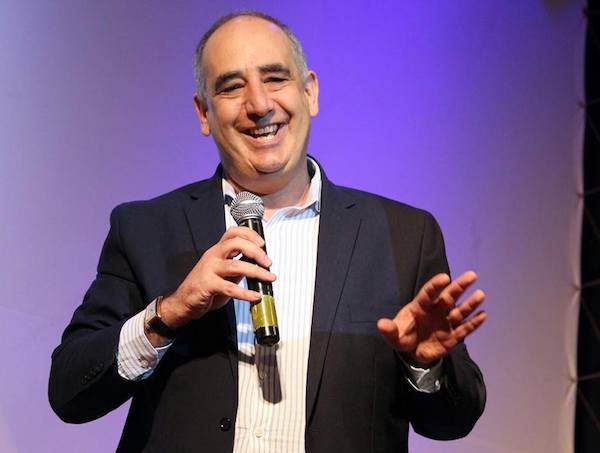
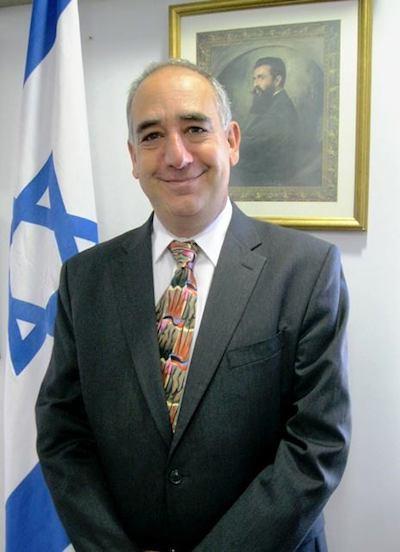
ARTHUR LENK is the Ambassador of Israel to South Africa, Lesotho, Mauritius and Swaziland. In this interview with KEMI AJUMOBI, he shares on his ambassadorial responsibilities and how Israel and Africa connect. Excerpts
GROWING UP
I am very blessed. I grew in a stable, comfortable family. My mother was a university professor and my father, a book publisher. So books and knowledge were all around me. There was a feeling that I could do anything, be anything if I worked and studied. I still believe that this is true. It is not always easy and there is no “self-made” person but a person can, with perseverance, creativity and education do anything.
Coping with the responsibility as Israel’s Ambassador to South Africa, Lesotho, Swaziland and Mauritius
I am Israel’s representative to those countries. Beyond the fancy title, I am really the head of Israel’s “branch office”. Think of my country as a company with 100 or so regional offices with the responsibility of telling our story, helping our citizens who are in the area, promoting trade (both import and export) and investment and ultimately, putting a face and voice for the nearly eight million citizens a tiny, successful country in a very complicated neighbourhood.
As part of Israel’s interaction with the Sharm el-Sheikh Fact-Finding Committee (“The Mitchell Committee”), which examined reasons for the start of violence in the region beginning in the autumn of 2000, what were your roles and how were you able to effectively carry it out?
I studied law at Israel’s Hebrew University and became a lawyer but quickly thought that I did not want to practice law so I joined Israel’s Ministry of Foreign Affairs to become a diplomat. But after my first two foreign postings (India and the United States), when I returned to Israel, I was asked to join the Legal department. In the summer of 2000, there was a famous peace conference at Camp David in the US and people thought and hoped that peace would be near and there would be need for many lawyers to take part in the negotiations. Unfortunately, the talks broke down when an Israeli offer was rejected by then Palestinian leader, Yasser Arafat. When violence started, a committee was formed to look into the reasons and encourage the sides back to dialogue. I was tasked to be on Israel’s team to use both my legal and diplomatic experience to tell Israel’s story. As it turns out, it was very interesting and I realized that I enjoyed the meeting place between law and diplomacy.
What is the Israel South Africa Water Week about?
Africa in general and South Africa in particular are currently suffering from an awful drought. There are real concerns about food security and water management looking forward. Israel, as a very arid country, since the time of the Bible, has faced these challenges very successfully. So, together with my partners at the Israel Embassy, we decided that in 2016, we would redirect our National Day reception budget and instead have three water technology seminars, in Johannesburg, Cape Town and Durban.
According to figures published by Israel’s Central Bureau of Statistics, Israeli exports to Azerbaijan grew by nearly 5000 percent during your tenure as ambassador. How did you achieve this?
Well, it wasn’t just me, of course. When I became Ambassador of Israel to Azerbaijan in 2005, there was very little trade between the two countries. But with the opening, in 2006, of an oil pipeline from the Caspian Sea via Georgia and Turkey to the Mediterranean Sea, the quick growth of trade became possible. Israel shares with our friends our agriculture, hi-tech and innovation experience and we bought a lot of the Azeri oil that was now quite near our shore. And since then the relationship has kept growing!
How are you promoting trade and development between Israel and other African countries?
Israel has 11 Embassies across Africa. In all of them we work to develop trade partner with our neighbours in Africa. We host events like #IsraelSAWater week or participate in regional trade events in a wide variety of areas like education technology, agriculture, cyber security or telecommunications, all areas where Israel has a competitive advantage with products and innovations that we think have a potential to help people in Africa. We also invite companies and individuals from Africa to visit similar events in Israel to see and learn firsthand about how cooperation and partnerships can grow.
Israel is considered the most advanced country in Southwest Asia and the Middle East in economic and industrial development, how have they been able to maintain this?
Lots of people call Israel the “Start-up Nation” and we have more start-up companies than countries with much larger populations. People have put a number of reasons forward. One is that because of our size, anyone with a good idea is not focused on the small local market but thinks globally. Another is that everyone in Israel – boys and girls – spends a significant time in our military after graduating high school. These young people get leadership and decision making experience, often using advanced technologies. They come out of the army at age 21-22 believing that they can do anything. A third reason is we don’t have a choice. We live in a very, very complex and too-often violent neighbourhood. So our choice is to innovate and succeed or be crushed. That feeling of having your back to the wall is very strong motivator!
Israel is a leading country in the development of solar energy, a global leader in water conservation and geothermal energy. How can African countries benefit from this?
We are interested in sharing Israel’s experience in these areas with our friends across Africa. We think that the more we know each other, the more it is possible. And if Israel can succeed in these spheres, despite drought, regional conflict and other challenges, other countries can too. That is one reason that Israel’s Prime Minister is planning to visit four African countries (Kenya, Uganda, Ethiopia and Rwanda) in early July 2016. We feel now, more than ever, that Israel and Africa have so much that we can and should do together.
What are you looking forward to achieving in your line of duty?
For the three years that I have been in South Africa, I have tried to tell more and more people about the various aspects of Israel that they might not read in the newspaper or see on TV. So I talk about water and agriculture and cyber security – all areas where Israel is a world leader and is open to cooperation and partnerships. I want to remind people across Africa that since the time of Genesis, Israel and Africa have been neighbours with shared interests and opportunities for cooperation. So Africans should know that they are welcome to visit Israel – to see and experience the unique holy sites and historical places for Jews, Christians and Muslims. And when they visit, they should look into our trade and development potential too.
When you look at Africa as a whole, what is your greatest desire?
I want more and more Africans to see us as neighbours. Israel is the only country that shares a land border with Africa. We have many shared challenges: agriculture, water, security threats that can be faced together. As Prime Minister Netanyahu recently said: “Israel is coming back to Africa and Africa is coming back to Israel!”
Nigeria’s economic challenges and the way forward
I don’t know that I can give specific advice but I do know that Israel and Nigeria have a long standing friendship and record of cooperation. Israeli companies and experts have interacted constructively across Nigeria since the 1960’s and our repeated message is that Israel knows many of the same challenges and frustrations that people in Nigeria feel. We have taken steps, many through leadership and others by companies and individual to face our most difficult problems. And if we can do it, Nigeria can too!
Greatest lesson learnt living several years as an ambassador
The greatest lesson is that people are generally friendly and interested in finding opportunities that allow everyone to “win”. In diplomacy you don’t need to defeat the other side like in a football match. If given an opportunity, or opening of a window, mutual benefit between seemingly different cultures and experiences is possible and rewarding. I am one of the luckiest people I know as I have a job that offers me the chance to spend time in different cultures and find ways to connect them to my country be it in places as different as India, the United States, Azerbaijan and South Africa. In all of these wonderful places, there are things that meaningfully connect to Israel, for the mutual benefit of everyone.
KEMI AJUMOBI

Join BusinessDay whatsapp Channel, to stay up to date
Open In Whatsapp