The Senate’s decision to reject a proposal for an open investigation into military spending has sparked criticism from security analysts, transparency advocates and civil society groups, who argue that accountability in the use of defence funds is essential to addressing Nigeria’s worsening insecurity.
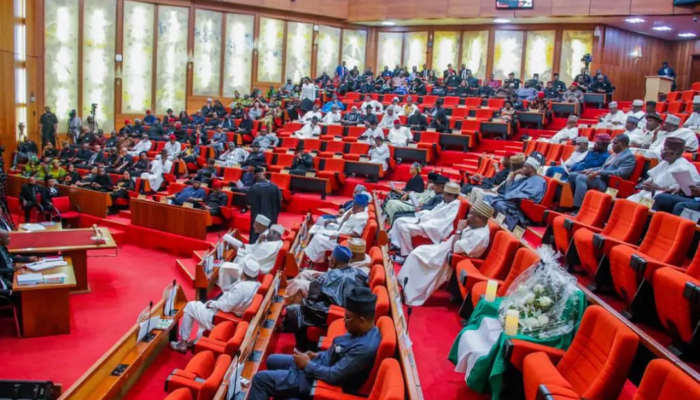
The controversy followed last Wednesday’s plenary when the Senate turned down a prayer by Adams Oshiomhole seeking a comprehensive audit of defence expenditure and military operations amid escalating cases of kidnapping, banditry and terrorist attacks across the country.
During the debate, Oshiomhole questioned the impact of years of massive security allocations on the country’s security architecture, arguing that the legislature had a constitutional responsibility to scrutinise how public funds appropriated for defence had been spent.
He maintained that repeated resolutions on insecurity had yielded little measurable outcome and called for stronger oversight.
However, the proposal failed to secure the support of the Senate.
Nigeria’s security sector has received increasing budgetary allocations in recent years as the government battles insurgency in the North-East, banditry in the North-West and North-Central, oil theft in the Niger Delta and rising kidnapping across several regions.
The Federal Government allocated about N5.4 trillion to defence and security-related spending in the 2026 budget, one of the highest sectoral allocations in the country’s history.
Ironically, only months before rejecting calls for a defence audit, senators had criticised what they described as inadequate and poorly structured funding mechanisms for security agencies, insisting that security institutions required better financing to confront growing threats
Defending the decision, Senate President Godswill Akpabio in a statement by his media office, later argued that subjecting the military to a public probe at a time when troops are engaged on multiple fronts could undermine morale and operational effectiveness.
According to Akpabio, such an exercise could distract the armed forces from their ongoing efforts against terrorism, banditry and other security threats.
But experts, who spoke with BusinessDay disagreed with the Senate’s position, insisting that transparency and accountability are critical to improving security outcomes.
Dickson Osajie, a security analyst democratic oversight of security spending should not be mistaken for hostility toward the military.
“Nobody is saying expose operational secrets or compromise ongoing operations,” he said.
“What Nigerians are asking is simple: after trillions of naira allocated to defence over the years, why is insecurity still spreading? Accountability is not a punishment; it is a mechanism for improving efficiency.”
According to him, several democracies conduct legislative reviews of military expenditure without weakening their armed forces.
“If funds are properly utilised, an audit should strengthen public confidence in the military, not diminish it,” he added.
Similarly, public affairs analyst Jide Ojo described the Senate’s refusal as a missed opportunity to reassure Nigerians that defence resources are being deployed effectively.
“The National Assembly appropriates funds. It therefore has a duty to ensure value for money,” Ojo said.
“Citizens are witnessing increasing attacks, kidnappings and loss of lives. Naturally, people will ask whether the huge investments in security are translating into results.”
He argued that accountability mechanisms could be structured to protect classified information while still allowing lawmakers to discharge their oversight responsibilities.
Transparency campaigners also criticised the Senate’s stance.
Auwal Musa Rafsanjani, the Executive Director of the Civil Society Legislative Advocacy Centre, said security votes and defence expenditures have historically remained among the least scrutinised areas of public finance in Nigeria.
“National security cannot become a blanket excuse for avoiding accountability,” Rafsanjani said.
“Even in countries facing wars and insurgencies, parliamentary committees review defence spending. Nigerians deserve to know whether public resources are producing the intended outcomes.”
According to him, secrecy without accountability creates opportunities for waste and inefficiency.
Also speaking, Umar Yakubu, the Executive Director of the Centre for Fiscal Transparency and Public Integrity, said concerns over troop morale should not override constitutional oversight obligations.
“The issue is not whether the military should be respected. The issue is whether public funds should be accounted for. Every institution funded by taxpayers must be subject to oversight,” he said.
While critics have faulted the decision, some security experts believe the Senate’s concerns are not entirely misplaced.
Paul Madaki, a security expert said public hearings on military finances could inadvertently expose sensitive operational information if not carefully managed.
“The challenge is finding the right balance between transparency and operational secrecy,” he said.
“Perhaps what is needed is a classified review process conducted by designated committees rather than a fully public investigation.”
The expert noted that many countries operate closed-door legislative oversight systems for intelligence and defence agencies.

Join BusinessDay whatsapp Channel, to stay up to date
Open In Whatsapp