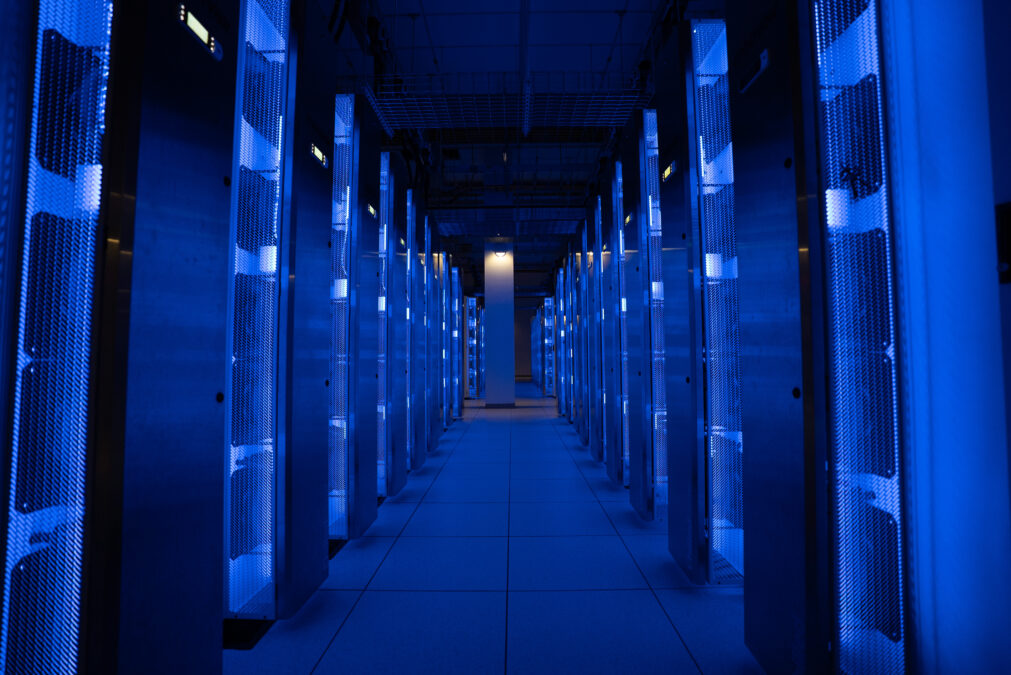
Schneider Electric SE and its liquid cooling unit Motivair are delivering more than $290 million worth of data center infrastructure to TeraWulf Inc.’s Lake Mariner campus in Barker, New York, the companies said Tuesday, in one of the more concrete illustrations yet of how industrial America is being reborn around artificial intelligence.
The phased buildout, when complete, will bring the former industrial site outside Buffalo to 750 megawatts of power capacity, enough to run a small city, and will serve anchor tenants Core42 and Fluidstack, the latter backed by Google. The deal underscores the lengths to which technology companies are going to secure reliable, affordable computing power as demand for AI workloads strains grids and supply chains across the country.
For TeraWulf, a company that started life mining Bitcoin before pivoting toward high-performance computing, Lake Mariner represents a calculated bet that real estate adjacent to cheap, clean power is among the scarcest commodities of the AI era. The New York regional grid supplying the campus draws roughly 89 percent of its electricity from zero-carbon sources, a selling point that resonates with hyperscalers under mounting pressure to decarbonize their operations.
“Time to power”, industry shorthand for how quickly a new data center can actually go live, has become the central anxiety of operators racing to capture AI spending. TeraWulf set an aggressive target: transform the legacy industrial site into a series of purpose-built AI facilities within twelve months. Schneider and Motivair were brought in to make that timeline real.
The infrastructure package includes Schneider’s Galaxy VX uninterruptible power supplies, lithium-ion battery systems and NetShelter rack enclosures, alongside Motivair coolant distribution units and its ChilledDoor systems, which pull heat directly off server racks running the dense, power-hungry chips that AI training demands. Schneider’s EcoStruxure software platform layers digital monitoring across the whole stack.
Sean Farrell, TeraWulf’s chief operating officer, described the Schneider and Motivair partnership as central to compressing construction timelines without sacrificing the operational reliability that big cloud tenants require. Long-term lease commitments from Core42 and Fluidstack give the campus a revenue floor as TeraWulf continues to build out capacity.
The transaction adds to a growing body of evidence that legacy industrial sites with existing power connections — former steel mills, paper plants, coal-fired generation facilities — are being quietly repriced by real estate investors and data center developers who understand that a permitted substation can be worth more than the acreage it sits on.
Manish Kumar, executive vice president of secure power and data centers at Schneider Electric, framed the project as a template for the broader industry challenge: moving fast without cutting corners on resilience. Whether that template can be replicated at the hundreds of sites now being scouted across the American industrial heartland will go some way toward determining how quickly the country can expand the physical infrastructure behind the AI boom.


Join BusinessDay whatsapp Channel, to stay up to date
Open In Whatsapp